

Qatar Sounds the Alarm After Houthi Entry into the War.. Hamad bin Jassim Warns of a Regional Explosion
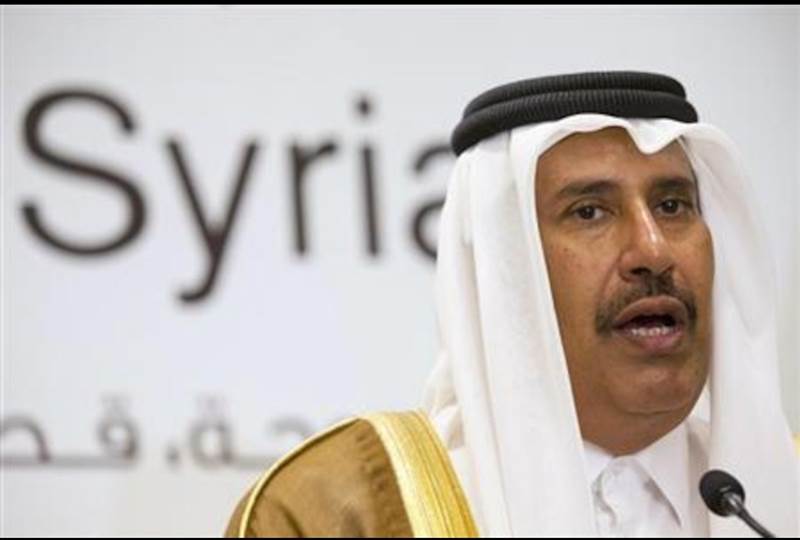
Former Qatari Prime Minister and Foreign Minister Sheikh Hamad bin Jassim Al Thani issued a series of stark warnings after Yemen’s Houthi militias announced their entry into the war in support of Iran, in what observers describe as a potentially dangerous turning point for the region.
Hamad bin Jassim described the Houthi move as extremely dangerous, warning that it could turn the entire regional equation upside down and push the Gulf and the wider Middle East toward a much broader and more complex conflict.
Analysts say these remarks reflect growing recognition that the current escalation is no longer a limited military confrontation, but rather a multi-layered regional crisis with serious implications for security and the global economy.
Al-Eryani: Houthis Are an Iranian Execution Arm
The Qatari warning came alongside serious statements by Yemeni Information Minister Moammar Al-Eryani, who revealed that additional commanders and experts from Iran’s Revolutionary Guard had arrived in Sana’a during the past week, coinciding with the latest military escalation.
In a post on X, Al-Eryani stated that the Houthis are not an independent partner or even a conventional ally, but rather an execution arm within a transnational military structure controlled by Iran’s Revolutionary Guard, which he said is responsible for planning, directing, and determining the timing and course of military operations.
These statements reinforce the growing view that the Houthis’ decisions on war and escalation are no longer purely Yemeni, but are increasingly tied to Tehran’s regional agenda.
A Direct Message to Trump
One of the most striking elements in Hamad bin Jassim’s remarks was his direct appeal to US President Donald Trump, urging Washington to take serious and decisive steps to end what he described as a dangerous spiral threatening regional and global stability.
He also raised critical questions about who is truly benefiting from the continuation of this war, openly questioning whether the real decision-making power lies in Washington or is being shaped by Israel’s influence.
In that context, he called for a stronger and more independent American role in controlling the direction of the conflict rather than leaving it fully in Israeli hands.
Netanyahu and the Israeli Lobby
Many regional observers believe Hamad bin Jassim’s mention of Israel was far from incidental. It reflects growing concern over the perceived influence of Benjamin Netanyahu and the Israeli lobby on key US strategic decisions, especially those related to war and regional escalation.
This has revived criticism that some American decisions appear to be increasingly aligned with Israeli priorities rather than purely American national interests.
Mounting Pressure Inside the United States
At the same time, reports from American media indicate that there is rising internal pressure inside the United States to stop the war from expanding.
This pressure is reportedly not coming only from the American public, but also from major US oil and energy companies, many of which are owned or influenced by billionaires close to Trump.
According to these reports, such actors have warned that continued military escalation could seriously damage the US economy, particularly in the areas of energy, transport, and industrial production.
Economic Fears Are Growing
Economic concerns have become increasingly visible, with some reports indicating sharp increases in fuel prices in several US states, raising fears that prolonged conflict could trigger broader disruptions across energy markets, manufacturing, and Wall Street.
Business leaders and market analysts have reportedly warned that the continuation of the war could fuel public anger inside the United States and produce severe economic consequences.
Houthis Risk Dragging Yemen and the Region into a Wider War
All of this comes amid growing fears that the Houthis’ entry into the conflict could expand the battlefield from Yemen into the Gulf, the Red Sea, and the Bab al-Mandab Strait, turning Yemen once again into a frontline of regional confrontation.
Observers warn that the most dangerous aspect of this development is that the Houthis are not merely dragging themselves into war, but are dragging Yemen as a whole into a dark and costly regional conflict in service of Iran’s agenda.
That could expose the country to more airstrikes, military retaliation, economic collapse, and deeper insecurity.
Conclusion
Taken together, the Qatari warnings, the Yemeni government’s accusations, and the growing economic and political pressure inside the United States all suggest that the region has entered an extremely sensitive and dangerous phase.
And at the center of this escalating picture, the Houthis once again appear as an Iranian-linked trigger point capable of destabilizing not only Yemen, but the entire region.
Also read
In a move reflecting rising diplomatic tensions, Algerian authorities announced on Saturday the initiation of procedures to cancel the air services agreement with the United Arab E...
The statements made today by Saudi Foreign Minister Prince Faisal bin Farhan were neither routine diplomatic remarks nor an attempt to ease tensions. Instead, they represented a cl...





Comments